 Al-Khabar Lebanese News
Related Articles


Freemasonry did not originate in the Middle East. Its roots trace back to the medieval guilds of stonemasons and builders who constructed cathedrals and major landmarks in Europe. These professional ties later evolved into a social and intellectual movement based on the values of liberty, equality, and fraternity, transcending religious and ethnic divisions. With its rapid spread in Britain and France, Freemasonry became associated with Enlightenment principles and influenced major European revolutions like the French Revolution, where many revolutionary thinkers advocated for Masonic ideals aimed at promoting social justice and political change.
When Freemasonry arrived in the United States with European immigrants, some Founding Fathers, such as George Washington and Benjamin Franklin, embraced it, and it became woven into the fabric of modern American values based on work, reason, and equality.
Although some countries, like Switzerland, require members to be Christian, Masonic rituals themselves are not tied to any religion. They distance themselves from religious matters, offering teachings through symbols and allegories that focus on work, reason, and logic as a path to personal development. Freemasonry doesn’t address religious or doctrinal concepts but is based on universal human values that advocate for building individuals and society through knowledge and pure work.
In this context, some clergymen in the Levant, fearing the influence of Western thought, tried to prevent Freemasons from joining religious communities, believing these rituals, born in a Western environment, reflected values that threatened the stability of the Church. Their campaign focused on Masonic symbols like the square and compasses and the Eye of Providence, accusing them of satanic meanings, even though, in Masonic philosophy, they represent intellectual tools for promoting wisdom, knowledge, and rational action. These symbols were taken out of context and arbitrarily interpreted for purely religious purposes.
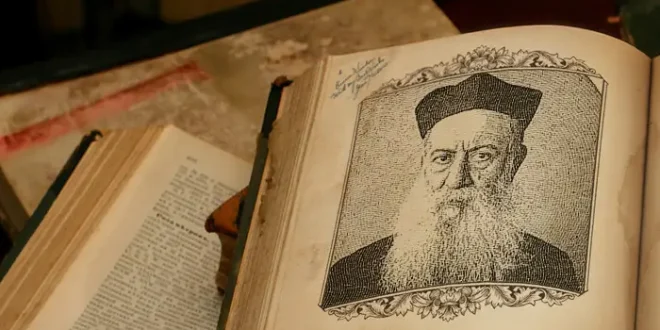
The book The Preserved Secret Concerning the followers of Freemasons (1900) by an extremist Syrian cleric reflects this trend, presenting a hardline view that mixes religious concepts and Masonic symbols, attempting to portray them as a threat to Eastern values. The author ignores the philosophical dimension of Freemasonry, focusing on symbolic rituals and trying to link them to a supposed satanic influence, even though Masonic culture is far removed from these concepts. Freemasonry seeks to build society and individuals through the values of work and rationality and disavows any connection to religious doctrines or sacred symbols.
If the true spirit of the legendary architect Hiram Abiff, a symbolic figure in Freemasonry, were present in the analysis, the author would have shown how Freemasonry celebrates what serves humanity in general, and that its rituals and allegories aim only to elevate the individual and society through pure work and rationality, far from doctrinal conflicts. However, the author used these symbols and rituals to distort its philosophy in an attempt to draw Freemasons towards the Church’s authority.
Thus, the author’s view of Freemasonry emerges as a movement threatening Eastern civilization due to its Western connection, ignoring the true philosophical dimension that Freemasonry seeks to promote: building individuals and their moral values, separate from religious divisions.
All these intellectual misfortunes and misinterpretations of Freemasonry stemmed from the hardline view of some clergymen in Syria, where a campaign against Freemasonry gained momentum, directing criticism towards what was considered a cultural and religious threat. Syria, in its historical context, witnessed an influential presence of Christian religious institutions, and the Church played a prominent role in shaping societal vision and culture, making it keen to protect its influence from new ideas and practices that might undermine it.
When Freemasonry reached Eastern societies, especially Syria, it faced walls of skepticism and misinterpretation, associated in some minds with Western movements and European thought far removed from Eastern values. For the Church, this “foreign” thought threatened the religious order upon which the institution’s authority rested. From this perspective, the Church interpreted Masonic practices and symbols as undesirable tools aimed at seizing control. These fears may have been driven by a rigid view that prioritizing the preservation of cultural and religious affiliation.
This Syrian stance can be interpreted as stemming from intellectual and religious sensitivity towards what is considered Western infiltration affecting the region’s identity. With the rise of Freemasonry and its rational philosophical ideas, the Church saw it as a threat that fragmented the intellectual hegemony of religious authority, so it surrounded Freemasonry with an aura of demonetization and religious misinterpretation to keep people away.
This did not stop at the beginning of the 20th century but continued and evolved until 2005 and beyond. In reality, “self-interest” was the decisive factor in dealing with the “phenomenon” for the Syrian Church. However, it was possible to “benefit” from influential figures in America, so some in Syrian society worked to distort and disconnect influential figures and access them somehow through bridges in Lebanon and other places, twisting Masonic culture and separating it from its proper context. This allowed them to steer analyses and theories according to their political and religious desires and interests, confining them to other competing organizations like Rotary or Lions clubs in Lebanon. Through this manipulation, attempts emerged to push certain Masonic values into a context aligned with specific agendas unrelated to the organization as an organization.
For example, there was a motive for some figures to revive the “Alawite state” in Syria, specifically, where a scene similar to what happened in Lebanon was constructed, attempting to embody a kind of Christian spiritual control, separate from another control. These attempts aimed to reaffirm Christian influence, which was believed to have declined under a new dominant Syrian landscape.
These attempts manifested in an effort to dismantle Western Masonic dominance, some of whose members in America and Lebanon had become active and influential forces on the world stage, surrounding them with Rotary and Lions clubs to “gain” benefits related to embassies, knowing that Freemasonry itself has no connection to any embassy, but the influential men do. In other words, the goal was to break the significant Masonic influence in the world by reconstructing a scene that transcends traditional boundaries, benefiting some local political and religious forces by exploiting sectarian and ethnic divisions to their advantage.
Thus, it wasn’t merely cultural and religious criticism of Freemasonry but transformed into a complex political game involving religion, politics, and history, through which some local powers tried to regain their ability to influence the global stage. These strategies were part of hidden wars focused on rearranging regional and global influence, hinting at the ability to control the larger Masonic scene in America and Lebanon.
In the end, it appears that Freemasonry, as it originated in the West, has been reinterpreted and transformed into a tool for political and religious exploitation in the Middle East, where its history and symbols are exploited in power struggles between local and regional forces. By utilizing Masonic concepts to steer religious or ethnic policies, some have attempted to reshape the reality of the Middle East in accordance with their own interests, using Masonic rituals and symbols as tools in a broader conflict.
Despite these forces’ attempts to frame Freemasonry as a threat to the Church or state authority, the philosophical essence of Freemasonry remains distant from these interpretations. Freemasonry was founded on universal values of work, rationality, and fraternity, aiming to build societies and individuals away from religious and ethnic divisions.
Over time, it has become clear that dealing with Freemasonry is no longer merely an intellectual or cultural debate but has transformed into an arena of political and ideological conflict, reflecting tensions in the Middle East and the continuous need to reshape the cultural and religious identity of this region.

