Al-Khabar Lebanese News
Related Articles


Rita Boulos Shehwan
Lebanon’s economic collapse has become a central driver of illegal dynamite fishing along the northern coast, pushing fishermen toward destructive methods that are both accessible and cost-efficient under conditions of extreme poverty. As incomes collapse and fuel, equipment, and legal fishing operations become increasingly unaffordable, ammonium nitrate—widely available, relatively cheap, and easily repurposed—has emerged as a substitute tool for maximizing short-term catch. Its low cost, especially compared to the rising expenses of conventional fishing, makes it an attractive option for fishermen struggling to survive in a devalued economy. At the same time, the erosion of state capacity and the absence of effective enforcement allow these materials to circulate with minimal oversight. This convergence of economic hardship and cheap, adaptable inputs has normalized the use of improvised explosives, embedding dynamite fishing within a broader informal economy shaped by crisis. The result is a system where immediate financial relief is achieved at the expense of long-term environmental sustainability and sectoral collapse.
Amid the ashes of economic collapse and the struggle for survival, Lebanon’s northern sea is reenacting the tragedy of “ammonium nitrate” that destroyed the Port of Beirut—this time through a silent catastrophe in the depths, where the fisherman becomes a three-dimensional victim. Politically, the same system that produced the collapse facilitated the entry of these chemicals and kept ministries without operational budgets, ensuring their dependence on a corruption network built on import-license rents, effectively unleashing a war in the depths using a weapon whose military-grade form differs from agricultural material by only three chemical degrees. Environmentally, the fisherman is forced to destroy his aquatic future to secure immediate sustenance. Physically, he faces the risks of death and poisoning. From Tripoli in the north to the border towns of Abdeh and Arida, the sea awakens to explosions using materials akin to military explosives, embodying the syndrome of “immediate survival and deferred destruction.” Researcher and environmental activist Najib Kdeih notes that as deprivation intensifies, fishermen are driven to devastate the seabed to secure daily food, using wartime tools to create random artificial graveyards (“hattat”) and detonate them with dynamite despite their illegality. Economic collapse and extreme poverty thus transform the fisherman into an environmental destroyer, amid state absence that enables an illegal economic system protected by politically connected networks.
https://www.facebook.com/share/v/1CpHBF6ENr/
These “hattat”—random artificial reefs used to gather and then blast fish—evolved during the chaos of the civil war and state absence, when fishermen dumped car wrecks and broken refrigerators to create fish shelters. Their tactics vary geographically and in terms of security. In Beirut, Mount Lebanon, and the south, “white foam hattat” are common due to their lightness and ease of concealment from patrols. Diver Ali Miqdad explains their structure, observed in Khaldeh, Damour, Jnah, and Ouzai: a heavy base rope anchored with stone weights (“taqqalat”), to which foam bags are attached, lifting it vertically so it appears suspended in water. Similar setups exist in Tripoli, where fishermen precisely mark locations using GPS to avoid losing costly investments, instructing divers to quickly collect the fragmented catch. The white foam attracts fish because it is cheap, foldable, and easy to hide during inspections. In contrast, northern fishermen often use car wrecks purchased for $40–$100 with cheap used tires, sinking them gradually to form durable iron “islands” on the seabed. Miqdad distinguishes three types of marine life in these environments: mid-water fish targeted for catch (such as kingfish and seasonal species traveling in schools), bottom-dwelling fish like red mullet and grouper that rely on natural shelters and return more slowly after blasts, and other pelagic species that complete the marine ecosystem.
Miqdad explains that algae grow like fine grains within a week after installation, expand after a month, and after six months become shell formations the size of chickpeas that continuously attract fish. Fishermen choose the type of “hatta” based on logistical and security considerations: foam setups are cheap and portable, while car wrecks provide optimal habitats for valuable bottom fish like grouper but are harder to transport and risk detection. Ultimately, however, this process turns “the refuge into a slaughterhouse”: these scientifically designed habitats for breeding and feeding become, through dynamite fishing, death traps and mass graves, eventually attracting undesirable species such as pufferfish and jellyfish.
Mechanism of killing and concealment underwater
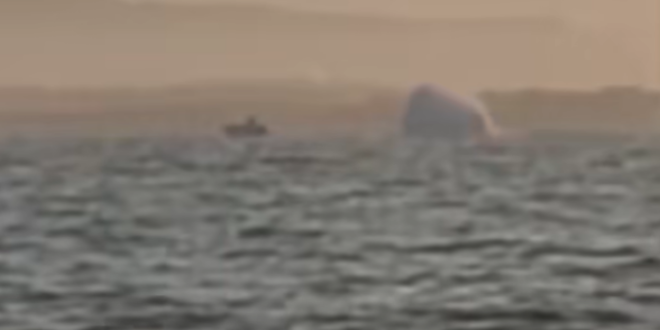
Once fish gather, the killing process begins by calibrating the fuse so the charge explodes at a specific depth in mid-water, avoiding destruction of the costly structure on the seabed. After ignition, the fisherman—like Saif—flees at maximum speed using a powerful engine (up to 50 horsepower) to reach a safe distance from the blast pressure, which occurs within a minute. Immediately afterward, he returns with two or three divers who collect the dead fish using a “compressor” system (an onboard air pump supplying divers through long hoses instead of oxygen tanks), allowing them to remain underwater for hours before the fish drift away or patrols arrive. Dr. Shadi Mhanna of the Ministry of Agriculture explains that compressor use is illegal and causes fatal accidents and lung damage due to inhalation of burnt oil fumes, in addition to the risk of paralysis. Fishermen have developed concealment tactics, such as coating compressor tanks with anti-rust materials and sealing hoses to prevent water entry, to evade army intelligence and border patrols.
The reality reveals the militarization of agricultural fertilizers: imported or smuggled ammonium nitrate is chemically re-engineered with detonators to become a sea bomb. The difference between stable material and lethal weapon lies in just three laboratory concentration levels (33% or less for agriculture versus above 36% for military use). Chemist and Professor Harith Sleiman explains that ammonium nitrate is relatively stable and does not detonate spontaneously; it requires thermal and kinetic shock—known as “sympathetic detonation”—triggered by a highly explosive intermediary like TNT. As border controls tightened and quarries shut down, fishermen faced shortages of detonators (“caps”), driving black market prices from $2 to $600. This surge created incentives for organized smuggling networks that divert surplus detonators allocated to licensed southern quarries and resell them in the north at inflated prices.
Scientific anatomy of the crime: destroying the ribbon of life
Dr. Imad Saoud, Professor of Aquaculture and Aquatic Science at the American University of Beirut (AUB), explains that Lebanon’s sea is environmentally classified as “nutrient-poor” due to its immediate deep waters off the coast—preventing sunlight from reaching the seabed—and the lack of major river inflows supplying organic material. Dr. Najib Kdeih, researcher and environmental activist, emphasizes that dynamite’s danger lies in its mechanical destruction of the ecosystem: explosions kill all living organisms within the blast radius (eggs, larvae, small fish, and plankton), turning the area into a dead zone. This reflects a syndrome of “transient profit and environmental bankruptcy”: destroying larvae—where one kilogram could yield tons of fish months later—robs the sector of its future wealth, turning today’s quick gain into tomorrow’s aquatic collapse, which in turn fuels the spread of species like pufferfish.
Regarding species decline, Dr. Imad Saoud, Professor of Aquaculture at AUB, notes that dynamite is not the sole cause of the disappearance of certain species such as sea urchins (“tutya”) or the decline of red mullet (“Sultan Ibrahim”); multiple factors are involved, including overfishing, dredging, and sedimentation.
A network of overlapping interests controls Lebanon’s coastline, hollowing out the deterrent effect of outdated fishing laws dating back to 1926. This is reflected in sectarian-geographical selectivity: chaos dominates northern waters due to lack of oversight and political mediation, while Beirut’s central Karantina fish market—the largest financial artery for imports—falls under the influence of a political faction linked to the parliamentary leadership, which also controls the under-resourced Ministry of Agriculture. This raises the question of vested interest in allowing such maritime disorder. Overlapping responsibilities among the Ministries of Transport and Agriculture, security forces, and the army create organized evasion of accountability. Ahmad Tamer, Director of Tripoli Port, explains that the port authority licenses vessel movement, the land and maritime transport sector oversees the fishermen’s basin, and the navy handles security. Although the port installed a 130-camera surveillance system provided to security agencies and army intelligence, enforcement remains weak: 33 known violators have been released due to political interference.
Here, “electoral patronage” emerges. Although the law prohibits explosives, “hattat,” and compressors, politicians protect fishermen as an electoral base, with arrests often overturned through high-level interventions and bribes that downgrade environmental crimes to minor offenses. Dr. Imad Saoud argues that the crisis is not scientific but political, a view echoed by Dr. Shadi Mhanna of the Ministry of Agriculture, who stresses that enforcement requires firm political and security decisions and imprisonment of offenders rather than excuses about limited resources—especially since identifying known violators is straightforward when they return to militarily monitored ports.
Rescuing the sector from collapse could be achieved within six months. This would begin with strict control over detonator circulation, alongside updating outdated legislation to prevent political settlements. Continuing to ignore politically driven explosive massacres will not protect the livelihoods of the poor; it will accelerate the desertification of the seabed. The Lebanese state thus faces a real choice: enforce the law decisively to link fishermen sustainably to their environment, or continue policies that serve fish importers among the corrupt political elite.