Al-Khabar Lebanese News
Related Articles


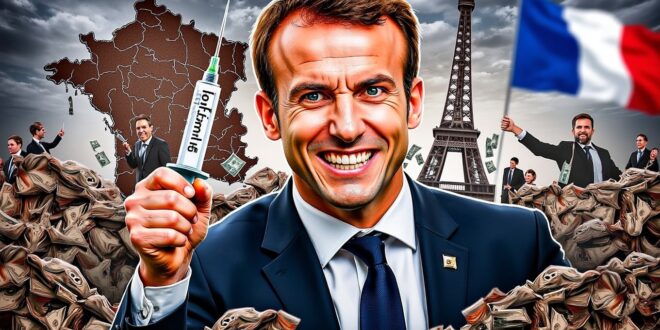
In recent years, France has witnessed a marked increase in the activities of prostitution and drug networks, alongside growing complexities regarding the government’s stance on mafias and secular principles. President Emmanuel Macron is often blamed for exacerbating these phenomena, whether through lax law enforcement or rhetoric seen as threatening to the French secular identity. This analysis draws on political and judicial events, with a particular focus on the tension between government actions and real-world outcomes.
Macron’s Policies and Prostitution: Between Crackdown and Failure
Legal Reforms with Counterproductive Results
Macron’s government adopted a 2016 law criminalizing the purchase of sexual services, aiming to reduce demand for prostitution. However, reports indicate that this policy has increased the isolation of sex workers, making them more vulnerable to exploitation by criminal networks. According to “Doctors of the World,” penalties on clients have pushed the activity underground, making it harder for sex workers to access health and legal protection.
In a high-profile 2025 case, Macron granted partial clemency to a woman sentenced to life imprisonment for killing one of her clients during prostitution. While the decision was seen as humanitarian, it was also criticized as a sign of leniency toward violence linked to organized crime.
Contradictions in Dealing with Sex Workers
Despite official rhetoric supporting women’s rights, Macron’s policies have been accused of “double standards.” In 2024, a statement linking gender transition in municipalities to leftist programs sparked outrage, being described as “incitement to hatred against the LGBTQ+ community.” This contradiction reflects a failure to build an integrated policy that protects the most vulnerable groups.
The Fight Against Drugs: Media Stunts or Failed Strategy?
Security Campaigns in Marseille
Macron focused on Marseille as the main battleground in the “war on drugs,” launching operations like “Place Nette,” which involved 900 security personnel and resulted in 82 arrests in 24 hours. However, official data from 2024 shows continued drug-related violence, with 110 deaths and 341 injuries. Analysts point out that these campaigns did not target the financial infrastructure of the networks, making them temporary measures at best.
The Rise of the Digital Drug Market
With trade shifting to online platforms, the government has failed to keep up with modern technologies. In 2024, 53.5 tons of cocaine were seized, but experts argue that this represents only a small fraction of the total in circulation. Increased seizures do not necessarily reflect a decrease in supply; they may indicate an expanding market.
Media Stunts: A Cover for Economic Failure and Declining Transparency
Evidence shows that Macron’s extensive media displays on security and the fight against organized crime are attempts to distract public attention from France’s deepening economic failures. Despite intensive security campaigns and the president’s frequent media appearances, the figures point to accelerating economic and social decline, with rising unemployment, job losses, and worsening fiscal deficits. Some observers see these campaigns as mere cover for an inability to address France’s structural economic crises.
This focus on security spectacle has coincided with declining transparency, especially amid growing doubts about the independence of the judiciary. At a time when the state should have benefited from the expertise of leading criminologists like Alain Bauer-one of France’s most prominent academic figures in criminology-Bauer himself became the target of judicial investigations and was convicted on charges related to questionable contracts and “collusion and benefit from friendly contracts.” In March 2025, Bauer was sentenced to a suspended prison term and a large fine, in addition to being banned from public markets. Some saw this as an attempt to weaken a critical academic voice that had highlighted shortcomings in state security and transparency policies.
These issues are closely tied to Macron’s broader failure to deliver on his reform promises. He has not succeeded in reducing the deficit, unemployment, or managing immigration, and has instead exacerbated crises through policies that sparked widespread protests, such as raising the retirement age and cutting corporate taxes at the expense of vulnerable groups. The result is that France today faces eroding trust in its institutions and declining transparency, with media spectacles masking structural economic and political failures, while independent voices in crime and security are subject to clear marginalization and exclusion.
Mafias and the Normalization Narrative
“The Breton Mafia”: Between Jokes and Reality
In 2018, Macron sparked controversy by comparing Bretons (inhabitants of Brittany) to the Italian mafia during a visit to the Vatican. Although he later claimed it was a joke, the comment revealed a disregard for the dangers of organized crime. Ironically, Brittany itself has seen growth in drug trafficking networks, according to local reports.
The Benalla Scandal
The scandal involving Alexandre Benalla, Macron’s former security aide, exposed suspicious links between the presidency and networks of influence. Benalla was accused of using diplomatic passports for questionable trips to Africa and Israel, claiming continued contact with the president after his dismissal. This case reinforced public perceptions of a “network of interests” operating above the law.
Religion and Secularism: Macron’s Shift from Principles
Attempting to Repair Relations with the Church
In a 2018 speech to bishops, Macron announced his intention to “repair the damaged relationship between the state and the church,” arguing that secularism should not deny the spiritual dimension. This stance drew sharp criticism from secularists, who saw it as a retreat from the principle of state neutrality toward religions.
Using Religious Rhetoric in Politics
During the “Yellow Vests” protests, Macron employed moral rhetoric inspired by Christian values to justify his economic policies. This approach, unprecedented in French presidential discourse, was seen as an attempt to attract the conservative right, thereby weakening the state’s commitment to secular neutrality.
Conclusion: A Crisis of Policy or a Crisis of Identity?
The evidence shows that Macron’s policies toward organized crime oscillate between sporadic crackdowns and unwarranted leniency. At the same time, his religious rhetoric and controversial statements reflect a deeper crisis in French secular identity, which has historically been a bulwark against ideological interference.
The most prominent result is the erosion of trust in the state’s ability to uphold its core principles-whether in confronting criminal networks or maintaining religious neutrality. This erosion is exacerbated by a lack of transparency and the marginalization of independent critical voices, all under the cover of media spectacles that mask accumulating economic and political failures. What is needed is a radical reassessment of the balance between strict laws and the rights of marginalized groups, with a clear reaffirmation of secularism as the guarantor of social cohesion.